India’s architecture and design industry is experiencing an extraordinary period of growth and international recognition in 2026, driven by the country’s booming real estate market where residential pre-sales crossed Rs 4.1 lakh crore in FY25, the government’s massive infrastructure investment of Rs 12.2 lakh crore in Budget 2026-27, and India’s growing ambition to build world-class cities, airports, cultural institutions, and public spaces. Indian architectural firms are increasingly competing internationally and winning recognition from global institutions, with Morphogenesis becoming India’s most globally awarded architecture firm, listed in the Global Top 100 Architectural Firms rankings. The Indian architecture profession is regulated by the Council of Architecture under the Architects Act 1972. India produces approximately 20,000 architecture graduates annually from over 500 schools of architecture, and architectural firms range from multi-disciplinary global practices to specialised boutique studios. The top architecture firms are led by Hafeez Contractor by number of built projects, Morphogenesis by international awards and sustainable design recognition, and HCP Design Planning and Management by corporate and master planning scale. Let us have a look at the top 10 architecture companies in India for the year 2026.
1. Morphogenesis Architecture Studio
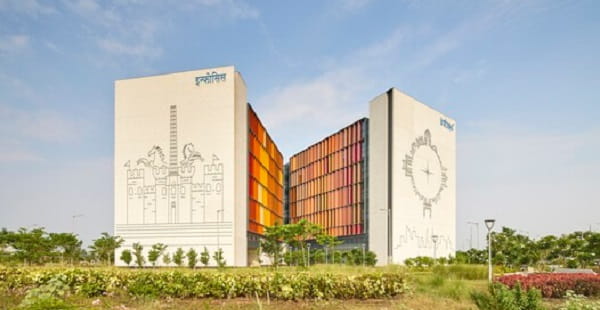
Morphogenesis, founded by Sonali and Manit Rastogi and headquartered in New Delhi, is India’s most globally recognised architecture firm, listed in the Global Top 100 Architectural Firms rankings and the only Indian firm that has consistently featured in international architecture publications and prize lists for its commitment to climate-responsive, culturally rooted, and environmentally sustainable design. The firm has won the World Architecture Festival Award multiple times and the Morphogenesis campus for Infosys, NIIT University campus in Neemrana, and the Pearey Lal Bhawan in Delhi are cited as landmark examples of Indian contemporary architecture that balances technical performance with aesthetic distinction. The studio has approximately 200 professionals and has designed projects across multiple countries.
Morphogenesis serves corporate campuses, educational institutions, cultural facilities, and mixed-use developments with its climate-responsive and culturally sensitive architectural design, and is the Indian architecture firm that has done the most to build India’s international architectural reputation through consistent award wins, academic publication, and discourse participation that positions Indian contemporary architecture in global conversations about sustainable and contextual design.
2. Hafeez Contractor Architects
Hafeez Contractor, the Mumbai-based architect and founder of his eponymous practice established in the year 1975, is one of India’s most prolific and commercially successful architects, having designed over 400 buildings across residential, commercial, institutional, and mixed-use categories that collectively represent hundreds of millions of square feet of built floor area. Contractor is the most recognised name in Indian mainstream architecture for high-rise residential and commercial development, having designed landmark towers for DLF, Lodha, Godrej, and most of India’s major real estate developers at one point or another. His firm employs hundreds of professionals across its Mumbai headquarters.
Hafeez Contractor Architects serves India’s largest real estate developers with high-rise residential, commercial, and mixed-use architectural design, and has produced more built commercial architecture in India than any other single architect, making his firm the most commercially impactful architectural practice in the country for shaping the visual character of India’s rapidly urbanising metropolitan skylines.
3. HCP Design Planning and Management Private Limited
HCP Design Planning and Management, one of India’s most established and respected architectural practices headquartered in Ahmedabad, was founded by the legendary H.C. Pandeya and has produced significant architectural, planning, and urban design work across Gujarat and nationally for both public and private sector clients. The firm is particularly known for its master planning capabilities and has been involved in some of India’s most significant urban and institutional design projects. HCP’s Ahmedabad base reflects the strong architectural tradition of western India shaped by proximity to the legacy of Le Corbusier in Chandigarh and the Ahmedabad work of Louis Kahn.
HCP Design serves public institutions, corporate clients, and urban development authorities with its comprehensive architectural and urban planning services, and its decades-long body of work in Gujarat and nationally reflects the high standards of design thinking associated with India’s western India architectural tradition that has produced some of the country’s most intellectually significant built works.
4. Christopher Charles Benninger Architects
Christopher Charles Benninger Architects, founded by American-Indian architect Christopher Benninger who established his practice in Pune, is one of India’s most thoughtfully regarded architectural practices known for producing humanistic, place-conscious architecture that prioritises user experience and community over formal signature style. Benninger’s SPARC Campus, Symbiosis University main campus, and various institutional and residential projects in western India are cited as exemplary works of architecture that create environments genuinely attuned to Indian climate, culture, and community needs.
Christopher Benninger Architects serves educational institutions, cultural organisations, and thoughtful private clients with humanistic, climate-responsive architecture that prioritises the quality of the human experience within buildings over formal architectural statement-making, and represents India’s most intellectually and humanistically committed strand of architectural practice that bridges international theoretical rigour with deep respect for Indian spatial and climatic traditions.
5. Kerstin Thompson Architects and Studio Mumbai (India-Based)
Studio Mumbai, the architectural practice led by Bijoy Jain and based in Mumbai, has achieved extraordinary international critical acclaim for its materially sensitive, craft-driven approach to architecture that draws on Indian building traditions of timber, stone, clay, and bamboo construction to create modern buildings of rare tactile richness and spatial quality. Studio Mumbai has been exhibited at the Venice Architecture Biennale, won the Aga Khan Award for Architecture, and featured in every significant international architecture publication, making it perhaps India’s most critically respected architecture practice internationally while maintaining a deliberately small and selective project portfolio.
Studio Mumbai serves discerning private clients, cultural institutions, and international design organisations with its craft-intensive, materially sensitive architectural projects, and is India’s most critically respected architecture practice internationally for its unique approach to building that treats craft knowledge as the foundation of architectural quality rather than an additive aesthetic layer applied over conventional construction.
6. Sanjay Puri Architects
Sanjay Puri Architects, founded by Sanjay Puri and headquartered in Mumbai, has built an international reputation for innovative and climatically responsive architecture across commercial, residential, and institutional building types that is particularly well known for its sophisticated handling of solar shading, natural ventilation, and biophilic design integration. The practice has won over 150 international awards and is among the most recognised Indian architectural firms in global architectural press, with projects across India and international commissions in multiple countries. Sanjay Puri Architects delivers architecture that is simultaneously formally inventive and environmentally intelligent.
Sanjay Puri Architects serves commercial, residential, and institutional clients across India and internationally with climatically responsive and formally innovative architecture, and the practice’s more than 150 international award wins represent one of the highest totals of any Indian architectural firm, reflecting a consistent ability to translate climate-intelligent design thinking into visually distinctive built work.
7. Nalini Thakur Architects (Delhi Heritage Conservation)
Nalini Thakur Architects and similar heritage architecture specialists represent the critical segment of India’s architectural profession focused on conservation, restoration, and adaptive reuse of India’s extraordinary built heritage spanning Mughal palaces, colonial-era institutional buildings, and pre-independence vernacular architecture. India’s rapid urban development creates constant pressure on its built heritage, and specialised architecture firms with expertise in heritage conservation documentation, material analysis, and sensitive restoration work serve both government archaeological authorities and private heritage property owners seeking to preserve historically significant buildings.
Heritage conservation architecture firms serve India’s archaeological authorities, heritage property owners, and cultural institutions with the specialised documentation, material analysis, and restoration services required to preserve India’s extraordinary built history from continued degradation, and represent the most ethically and culturally significant segment of India’s architectural practice that is building the professional infrastructure needed to protect thousands of years of built heritage from the pressures of rapid urbanisation.
8. Ar. Poorva Bhagat Associates (Urban Design)
Urban design specialists and master planners, represented by firms including Poorva Bhagat Associates and numerous other practices active in transit-oriented development, smart city planning, and large-scale urban area development, are among India’s most strategically important architecture firms given the country’s rapid urbanisation that will require designing and planning hundreds of millions of square metres of new urban fabric over the coming decade. India’s smart cities mission and urban development authorities have created substantial demand for urban design expertise at scales larger than individual building projects.
Urban design and master planning firms serve India’s urban development authorities, real estate developers planning large integrated townships, and government smart city agencies with comprehensive urban design frameworks that determine how new urban areas are spatially organised, connected, and experienced at the neighbourhood and city scale, making them among the most consequential design professionals shaping India’s future cities.
9. Vinesh Kapila Architects (Chandigarh)
Vinesh Kapila Architects and the broader Chandigarh-based architectural community represents India’s Punjab and Haryana regional design tradition shaped by the legacy of Le Corbusier’s and Pierre Jeanneret’s planning of Chandigarh — one of the most significant modernist urban planning experiments of the twentieth century. The architectural practices working in this region and preserving Chandigarh’s exceptional urban heritage while designing new architecture sensitive to its modernist context represent an important strand of India’s diverse architectural practice.
Chandigarh-based architectural practices serve clients in Punjab, Haryana, and the surrounding region while simultaneously contributing to the preservation and thoughtful continuation of one of India’s most architecturally significant urban environments, reflecting the responsibility that comes with practicing architecture in a city whose design heritage has been recognised as a UNESCO World Heritage Site.
10. Ar. Shirish Beri and Associates (Ecological Architecture)
Ar. Shirish Beri and Associates, an architecture practice based in Kolhapur, Maharashtra and known for deep commitment to ecological and bioclimatic design principles that draw on traditional Indian architecture’s passive cooling strategies, earth construction, and site-sensitive design, represents India’s most consciously sustainable and vernacularly rooted strand of contemporary architectural practice. Shirish Beri’s work has received recognition from the Aga Khan Award for Architecture and has been widely published in sustainable architecture journals for demonstrating how contemporary buildings can achieve comfort and quality without the energy intensity of conventional air-conditioned construction.
Shirish Beri Architects serves clients who prioritise ecological sustainability and thermal comfort through bioclimatic design with its buildings that achieve natural comfort through site planning, material selection, and form rather than mechanical conditioning systems, and represents India’s most consistent and intellectually rigorous commitment to the principle that architecture should be designed to work with India’s climate rather than against it through energy-intensive air conditioning.
Frequently Asked Questions (FAQs)
Q: Which is the most famous architecture firm in India in 2026?
A: Morphogenesis is India’s most internationally recognised architecture firm, listed in the Global Top 100 Architectural Firms rankings and consistently recognised at the World Architecture Festival. Hafeez Contractor is India’s most prolific commercial architect by number of built projects and total floor area designed. Studio Mumbai led by Bijoy Jain is India’s most critically acclaimed practice internationally for its craft-driven, materially sensitive approach to architecture.
Q: How is India’s real estate boom affecting architecture firms?
A: India’s record-breaking real estate market with residential pre-sales crossing Rs 4.1 lakh crore in FY25 and commercial real estate expanding rapidly is creating extraordinary demand for architectural design services at every scale from individual luxury homes through large integrated townships. Architecture firms across India are experiencing their busiest periods in years, with premium residential, corporate campus, retail, and mixed-use projects driving growth across both large established practices and boutique design studios.
Q: What is sustainable architecture and how are Indian firms pursuing it?
A: Sustainable architecture designs buildings to minimise environmental impact through passive cooling and heating strategies, renewable energy integration, water recycling and rainwater harvesting, sustainable materials sourcing, and biophilic design that connects building occupants with nature. India’s Green Rating for Integrated Habitat Assessment or GRIHA and the American LEED rating systems are the two most commonly used sustainability certification frameworks. Morphogenesis, Sanjay Puri Architects, and Shirish Beri Architects are among India’s most recognised practices for consistent achievement of measurably sustainable building performance.
Q: What is the Council of Architecture and what does it regulate?
A: The Council of Architecture is the statutory body established under the Architects Act 1972 that regulates the architectural profession in India. The Council registers qualified architects, sets minimum standards for architecture education, prescribes the syllabus for architecture degree programmes, and takes disciplinary action against unregistered individuals practising architecture. Only registered architects can call themselves ‘Architect’ in India and sign construction documents as the architect of record for building permit applications. India has over 500 Council of Architecture-recognised schools of architecture producing approximately 20,000 graduates annually.
Q: How is technology changing architectural practice in India?
A: Building Information Modelling or BIM has transformed design coordination for large projects by enabling architects, structural engineers, and MEP consultants to work on a shared 3D model that detects coordination conflicts before construction begins, dramatically reducing expensive on-site design changes. Parametric design tools like Grasshopper for Rhino are enabling complex curved and geometrically sophisticated building forms that would have been impractical to design and document using traditional CAD methods. AI-assisted design generation tools are emerging as rapid ideation tools for exploring multiple design options. Virtual reality walkthroughs allow clients to experience proposed designs before construction begins.