Scalping trading is one of the fastest forms of trading in the financial markets. It involves making a large number of trades over a short period, sometimes lasting only a few seconds or minutes. The main objective of a scalper is to capture small price movements repeatedly rather than waiting for a large price movement.
For example, a trader may buy a stock at ₹500 and sell it at ₹501.50 after a few minutes. Although the profit per share is small, a trader may attempt several such trades during the trading session. Similarly, a scalper may take short positions when market conditions and applicable trading rules allow it.
Scalping can offer opportunities for active traders, but it also involves significant risks. It requires quick decision-making, strong discipline, market knowledge, suitable technology, and strict risk management.
Before starting scalping, traders should understand both its advantages and disadvantages.
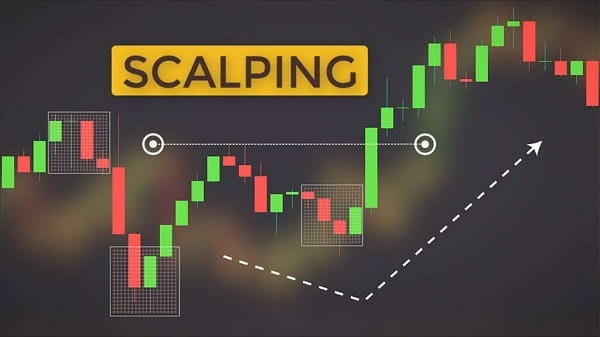
What Is Scalping Trading?
Scalping is a short-term trading strategy where traders attempt to profit from very small changes in the price of a financial instrument.
Unlike traditional investing, where an investor may hold shares for months or years, a scalper may hold a position for only seconds, minutes, or a short part of a trading session.
Scalpers generally focus on:
- Short-term price movements
- Trading volume
- Liquidity
- Bid-ask spreads
- Price patterns
- Market momentum
- Support and resistance
- Technical indicators
The basic idea is to enter a trade when a short-term opportunity appears and exit quickly when the target or risk limit is reached.
How Does Scalping Work?
Suppose a stock is trading at ₹1,000. A trader notices strong short-term buying pressure and expects the stock to move slightly higher.
The trader buys the stock at ₹1,000 and sells it at ₹1,002. If the trader has a large enough position, the small price movement can produce a meaningful gross profit.
However, the opposite can also happen. If the stock falls from ₹1,000 to ₹998, the trader can incur a loss.
Because scalpers aim for relatively small price movements, brokerage, taxes, exchange charges, bid-ask spreads, slippage, and other applicable costs can have a significant effect on the final result.
Advantages of Scalping Trading
1. Opportunity to Earn From Small Price Movements
The main advantage of scalping is that traders do not need to wait for a large market movement.
A stock may move only slightly during a short period, but a scalper attempts to take advantage of such movements.
This makes scalping different from positional or long-term trading, where traders usually seek larger price changes over a longer timeframe.
2. Short Holding Period
Scalpers generally hold positions for very short periods.
This means capital is not normally tied up in one trade for several days or weeks. Once a position is closed, the trader can reassess the market and potentially look for another opportunity.
Short holding periods can also reduce exposure to events that occur outside the period in which the trader is active, although they do not eliminate market risk.
3. Reduced Overnight Exposure
A scalper who closes all positions before the trading session ends generally avoids overnight exposure on those positions.
Overnight news can cause a stock to open significantly higher or lower than its previous closing price. Closing positions before the session ends can reduce exposure to such overnight gaps.
However, intraday price risk remains substantial.
4. Multiple Trading Opportunities
Scalpers may find several potential setups during an active market session.
Instead of relying on one large price movement, their strategy may involve attempting multiple small opportunities.
This can be useful for experienced traders who have a clearly defined trading system and can identify suitable setups quickly.
5. Can Be Used in Different Market Conditions
Depending on the strategy, scalpers may attempt to trade upward movements, downward movements, breakouts, reversals, or short-term momentum.
This flexibility can allow traders to adapt to different market conditions.
However, not every market condition is suitable for scalping. Very low volatility or poor liquidity can make it difficult to capture enough price movement to cover trading costs.
6. Quick Feedback on Trading Decisions
Scalping provides immediate feedback.
A trader generally knows relatively quickly whether a particular setup is working or failing. This can help experienced traders evaluate and refine their trading strategies.
However, short-term results should not be confused with guaranteed long-term profitability.
7. Less Dependence on Long-Term Fundamental Changes
Scalpers are primarily interested in short-term price behaviour.
They may not need to analyse a company’s long-term earnings, management strategy, or business growth to the same extent as a long-term investor.
Instead, their focus is generally on price action, volume, liquidity, and short-term market conditions.
Disadvantages of Scalping Trading
1. High Risk of Loss
The most important disadvantage of scalping is that frequent trading does not guarantee profits.
A trader can experience several consecutive losing trades, and a few large losses can potentially erase many small gains.
Because scalping involves rapid decision-making, mistakes can happen quickly.
2. High Number of Transactions
Scalping usually involves frequent buying and selling.
Every transaction can involve applicable costs such as brokerage, taxes, exchange charges, regulatory charges, and other levies.
When a trader makes a large number of trades, these costs can accumulate quickly.
A strategy that appears profitable before transaction costs may become unprofitable after all costs are included.
3. Requires Constant Attention
Scalping is highly time-sensitive.
A trader may need to watch charts, prices, order-book information, volume, and market developments continuously.
Missing a few seconds or minutes can sometimes change the outcome of a trade.
Therefore, scalping may not be suitable for people who cannot dedicate sufficient attention to the market during trading hours.
4. High Emotional and Psychological Pressure
Scalping requires traders to make decisions quickly.
Repeated gains and losses can create emotional pressure. Fear may cause a trader to exit a profitable position too early, while greed may encourage them to hold a position for too long.
After a losing trade, a trader may also attempt revenge trading to recover the loss immediately.
Such emotional decisions can damage an otherwise good trading strategy.
5. Small Profits Can Be Erased by Losses
Scalpers generally target small gains.
For example, a trader may make several small profitable trades but then suffer one relatively large loss because they failed to follow their stop-loss rule.
This is why maintaining a favourable risk-reward structure and controlling individual trade losses is extremely important.
6. Slippage Can Affect Results
Slippage occurs when the actual execution price differs from the expected price.
This can happen when prices move quickly or when liquidity is insufficient.
For scalpers, even a small difference in execution price can be important because their expected profit per trade may be relatively small.
7. Requires Fast Technology and Execution
Scalping often requires a reliable trading platform, stable internet connection, fast order execution, and access to accurate market information.
Technical problems can become particularly important when positions are held for only a short period.
A delayed order or connectivity problem may affect the outcome of a trade.
8. Difficult for Beginners
Scalping may look simple because trades are completed quickly. In reality, it can be one of the more demanding trading styles.
Beginners may make mistakes such as:
- Entering trades without a plan
- Taking too many trades
- Using excessive leverage
- Ignoring transaction costs
- Moving stop-losses
- Trading based on emotions
- Trying to recover losses immediately
For this reason, beginners should learn the fundamentals of trading and risk management before attempting live scalping.
Scalping vs Intraday Trading
Although scalping is a type of intraday trading, there is an important difference between the two.
| Factor | Scalping | Intraday Trading |
| Typical Holding Period | Seconds to minutes | Minutes to hours |
| Number of Trades | Usually high | Can be low to high |
| Profit Target | Usually small | Can be relatively larger |
| Market Monitoring | Very high | High |
| Decision Speed | Extremely fast | Fast |
| Transaction Costs | Can be significant | Generally lower than frequent scalping |
| Psychological Pressure | Very high | High |
| Strategy Focus | Very short-term movements | Broader intraday movements |
Risk Management Tips for Scalpers
Risk management is essential in scalping because a trader may take many positions in a single session.
Important principles include:
- Set a maximum loss per trade.
- Use an appropriate stop-loss strategy.
- Avoid excessive leverage.
- Trade only liquid instruments suitable for the strategy.
- Calculate all applicable trading costs.
- Avoid revenge trading.
- Do not increase position size simply because previous trades were profitable.
- Set a daily maximum loss limit.
- Keep a detailed trading journal.
- Stop trading when emotions begin affecting decisions.
Who Should Consider Scalping Trading?
Scalping may be more suitable for experienced traders who understand market mechanics, can monitor the market continuously, have quick decision-making skills, and follow strict risk-management rules.
It may not be suitable for someone looking for passive income or guaranteed daily returns.
Traders should also understand that having a high number of profitable trades does not automatically mean a profitable strategy. Overall results depend on the size of gains and losses, transaction costs, execution quality, and consistency.
Conclusion
Scalping trading can provide opportunities to benefit from small short-term price movements. Its major advantages include quick trade execution, short holding periods, reduced overnight exposure when positions are closed, and the possibility of finding multiple trading opportunities during an active market session.
However, scalping also has significant disadvantages. It requires continuous market monitoring, quick decision-making, emotional discipline, reliable technology, and careful control of trading costs. Frequent transactions can increase expenses, while slippage and unexpected price movements can reduce profitability.
The most important point is that scalping is not a guaranteed method of making money. Small profits can accumulate only when the trading strategy has a genuine edge and risk is controlled consistently.
For anyone considering scalping, learning the market, practising a well-defined strategy, controlling position sizes, and protecting capital should be more important than simply increasing the number of trades.