Yes. A taxidermy business is legal in India, but it is strictly regulated and generally requires a wildlife licence.
Taxidermy is the art of preserving, preparing and mounting the body or parts of an animal for display, education or scientific study. Taxidermists may work for museums, educational institutions, wildlife departments or private owners.
However, this is not an ordinary handicraft business. Animal skins, feathers, horns, antlers, bones, teeth and preserved bodies may be treated as wildlife trophies. Even an animal found dead naturally cannot always be collected or preserved without government permission.
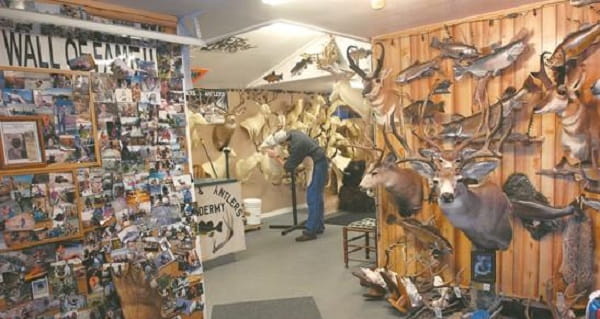
Legal Status of Taxidermy in India
Taxidermy is regulated mainly under the Wild Life (Protection) Act, 1972. The Act defines taxidermy as the curing, preparation, preservation or mounting of trophies.
Section 44 restricts a person from starting or carrying on business as a taxidermist without a licence. Therefore, business registration, GST registration or a municipal trade licence alone is not sufficient for handling wildlife specimens.
The licence is generally granted by the Chief Wild Life Warden or an officer authorised by the concerned state government.
Wildlife Licence for Taxidermists
A person intending to operate a taxidermy business must apply to the State Forest or Wildlife Department in the prescribed form.
Before granting a licence, the authority may examine:
- Applicant’s identity and background
- Previous experience in taxidermy
- Source of the animal specimens
- Proposed business premises
- Storage and security arrangements
- Possible impact on wildlife conservation
- Ability to maintain the prescribed records
The licence will normally mention the approved premises and operating conditions. Taxidermy work should not be conducted at an unapproved workshop or shifted to another location without permission.
The licence may be suspended or cancelled if its conditions are violated.
Lawful Source of Animal Specimens
A taxidermist must never accept an animal or animal part without verifying its source. The customer should provide ownership documents, wildlife permission, transfer records or other evidence showing lawful possession.
A taxidermist should not accept:
- Animals killed through illegal hunting
- Unexplained skins, horns, claws or feathers
- Protected birds found dead on roads or farms
- Wildlife parts purchased from an unlicensed dealer
- Specimens smuggled from another country
- Government-owned wildlife remains without permission
Wild animals found dead, killed in self-defence or recovered from protected areas may become government property. Finding a carcass does not automatically give a person the right to keep it.
Even naturally shed antlers, feathers or animal parts may be regulated. They should not be collected for commercial use without confirmation from the Wildlife Department.
Restrictions on Protected Species
Commercial taxidermy involving certain specially protected or scheduled animals is prohibited or severely restricted.
In limited situations, a licensed taxidermist may preserve such an animal:
- For the government
- For an authorised government organisation
- For an educational institution
- For a scientific purpose
- With prior written authorisation from the Chief Wild Life Warden
A private customer’s willingness to pay does not make the specimen legal. The taxidermist must refuse the assignment if the required ownership certificate or written permission is missing.
Records, Vouchers and Stock Reporting
The Wild Life (Transactions and Taxidermy) Rules, 2024 prescribe detailed documentation for licensed taxidermists.
When returning a preserved trophy, the taxidermist must issue a voucher containing details such as:
- Name and address of the owner
- Description of the specimen
- Charges collected
- Date of delivery
- Declaration or ownership details
- Taxidermist’s licence and address
- Signature of the taxidermist
Vouchers must be serially numbered and maintained in the prescribed manner. Copies may have to be submitted periodically to the Chief Wild Life Warden. Stock registers and specimen-identification records should also be kept ready for inspection.
Transporting wildlife specimens may require prior permission. A normal courier receipt is not a substitute for wildlife transport approval.
Other Business Registrations
Apart from the wildlife licence, the business may require:
- Proprietorship, partnership, LLP or company registration
- PAN and a current bank account
- GST registration when applicable
- Shops and Establishments registration
- Municipal trade licence
- Fire-safety approval
- State Pollution Control Board permission, depending on the process
- Employee-related registrations when applicable
Taxidermy involves chemicals, animal tissue and potentially contaminated material. The workshop should have ventilation, protective equipment, hygienic storage and a lawful waste-disposal system.
International Trade and CITES Rules
Importing or exporting preserved animals, skins, trophies or animal parts may require CITES documents, wildlife clearance, Customs approval and other permits.
A specimen being legally sold in another country does not automatically make its import into India legal. The exact species and its protection status must be checked before payment or shipment.
When Can a Taxidermy Business Become Illegal?
The business may become illegal when it:
- Operates without a required wildlife licence
- Accepts poached or illegally obtained animals
- Preserves protected species without written permission
- Creates false ownership or source documents
- Maintains unreported wildlife stock
- Transports trophies without approval
- Trades in prohibited wildlife articles
- Imports or exports specimens without permits
- Uses premises not approved under the licence
Violations may result in imprisonment, fines, seizure of specimens, confiscation of equipment and cancellation of the licence.
Frequently Asked Questions
Q: Can a taxidermist preserve a dead pet dog or cat?
A: Domestic pets generally do not attract the same wildlife restrictions as protected wild animals. However, the owner’s consent, proof of ownership and local animal-waste or public-health rules should still be followed.
Q: Can roadkill be collected for taxidermy?
A: Not automatically. If the animal is a protected wild species, the Forest or Wildlife Department should be informed. The carcass should not be removed without permission.
Q: Can a licensed taxidermist preserve a tiger or leopard?
A: Not for ordinary commercial purposes. Work involving highly protected animals is generally limited to government, educational or scientific purposes with specific written authorisation.
Q: Is an old inherited wildlife trophy legal to sell?
A: Not necessarily. Its age alone does not make the sale legal. The owner may require a declaration, certificate of ownership and permission before transfer or sale.